Wednesday, August 15, 2012

DARRACQ - Racing pioneer


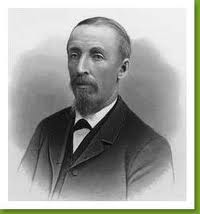
Alexandre Darracq (1855-1931) , a Frenchman , created Gladiator Cycle Company in 1891 and was very successful in the business. In 1896 , he sold the bicycle company and formed Automobiles Darracq et Cie. Initially Automobiles Darracq was involved in electric carriages, Millet motorcycles and Leon Bollee automobiles.  In 1900, Darracq built its first car and was the first to use pressed steel chasis and was one of the first cars to be manufactured using factory machine as compared to skilled labour.

A 1901 , 6.5 HP Darracq -


Alexandre Darracq expanded his geographical footprint by licensing his car designs.

In 1902, he licensed his design to Adam Opel of Germany who made cars branded as Opel-Darracq in Germany.

In 1905 , he formed A. Darracq and Company in Britain.

1906 , he licensed his design to a group of Italians and formed the company Societa Automobili Italiana Darracq (SAID) in Milan. This company did not do well and in 1909, a new company was formed Anonima Lombarda Fabbrica Autombili (A.L.F.A). This company flourished and was later taken over by Nicola Romeo which became Alfa Romeo.  A 1910, 24 HP A.L.F.A-


In 1907 , he licensed his design to Spain and formed Sociedad Anonima Espanola de Automiviles Darracq.

Darracq was heavily involved in racing and Darracq cars won many race events. Darracq was holding the land speed record in 1904 and 1905. Louis Chevrolet was one of the famous test drivers for Darracq. A Darracq racer -


Alexandre Darracq retired from business in 1913 and sold out his holdings to Britisher Owen Clegg who took charge of Automobiles Darracq. In 1919, Darracq acquired Talbot and in the next year Talbot-Darracq was merged with Sunbeam to form Sunbeam-Talbot- Darracq (STD) combine.

The STD combine collapsed in 1935 and was taken over by Rootes group. Rootes group went in to financial trouble in 1964 and was acquired by Chrysler Eurpoe. In 1978, Peugeot and Renault acquired the brands from Chrysler Europe.

The Darracq logo -

Sunday, August 12, 2012

ALLDAYS and ONIONS - Oddly named..

Alldays and Onions Pneumatic Engineering Company was formed in 1889 by the merger of  John C Onions Ltd and William Allday and Sons. These companies were involved in Engineering and blacksmith operations and were founded by John C Onions in 1650 and William Allday in 1720, respectively.

Alldays and Onions expanded in to manufacture of bicyles. In 1898 , Alldays and Onions manufactured their first car called the Traveller, even though it was not sold before 1903. An original 1900 Traveller -


By 1903 , Alldays and Onions were selling cars and also expanded in to Motorcycles. Motorcycles were sold under the Allday-Matchless name and was later renamed as Allon , so as not to confuse with another company by the similar name (Matchless). A 1903 Alldays and Onions Motorcycle -


Alldays and Onions manufactured and sold cars and Motorcycles and were known for their hill climbing ability. They expanded to trucks and tractors also.

In 1908, they acquired the Motor car division of Enfield Cycle Company called Enfield Autocar Co. Alldays and Onions brand and the Enfield Brand were kept separately and cars were sold under their own brand names. A 1907 and a 1914 Enfield car -


By 1919 , Alldays and Onions and Enfield Autocar Company were merged to form Enfield-Allday and from then on cars were made under the Enfield-Allday brand. A 1919 Enfield-Allday car -


The Allday and Onions logo -

Enfield - Alldays closed operations in 1925 and the Enfield brand was repurchased by Enfield Cycle Company.


Sunday, August 5, 2012

WHITE - Sewing machines to trucks


Thomas H White (1836 - 1914) was an inventor and pioneer of sewing machines which were sold under the New England Brand and later White brand. In 1858, Thomas White founded the White Manufacturing Company to manufacture and sell sewing machine and components. The company was renamed as White Sewing Machine Company in 1876. In 1894 , his son Rollin Henry White (1872 - 1962) joined the company and was interested in horseless carriages and automobiles.

In 1898 , he bought a Locomobile steam car and went about improving the reliability of its boiler. In 1898 he invented a flash boiler suitable for automobiles. The flash boiler had coiled water tubes and had the advantage of reducing the starting time of a steam car from the traditional 20+ min to less than 10 min. He had also used the compound steam engine with high pressure and low pressure cylinders. A condenser in the front recycled the exhausted steam back to the water tank as water, thus increasing the range.

Watch Jay Leno start and drive  a 1907, 30 hp White Steamer here.

In 1900, they made the first steam car with the flash boiler. Rollin white developed variants with his steam engine including trucks.  A 1900 White steam car and truck.


White entered in to racing and in 1905 , a White Racer named "Whistling Billy" set the land speed record of 74 mph. In 1906 the company was renamed as White Motor Car co.


White also had the reputation of being the first official Presidents Car in the USA. In 1909, President Taft made a White Model M his official state car. White is also credited with the first automobile to be used in wars for transport. The official state car - Model M -


By 1910,  realising the mass adoption of internal combustion engine, they moved to manufacture of Gasoline engine trucks. White trucks were famous for their quality and were in demand from all over the world including for military purposes.

White Motor Car Company consolidated its leadership in the truck segment by acquiring a lot of truck companies. In 1951 they acquired Sterling Motor Truck Company; in 1953 they acquired Autocar Company; in 1957 they acquired REO Car Company and in 1958 they acquired Diamond T Motor Car company. In 1976 they merged Diamond T and REO to form the Diamond Reo Truck company.

White Motor Car company with all its subsidiaries were taken over by Volvo Trucks in 1981 and the brand slowly disappeared after that.

The logo of White -

Saturday, August 4, 2012

LOCOMOBILE - Steam to Gas


John Brisben Walker (1847 - 1931), a magazine editor and Amzi Lorenzo Barber (1843 - 1909) , a road asphalting contractor formed the Locomobile Company to manufacture steam automobiles - the name Locomobile being derived out of Locomotive & Automobile.

In 1899, they bough the patent rights for a steam car from the Stanley brothers for $250,000, with only one car of that design made and 199 pending orders.  Shortly after formation of the company John Walker left Locomobile. From 1899 till about 1902, Locomobile made and sold about 4000 steam cars. A 1901 Locomobile steamer -


Locomobile steamers were the first automobiles to be used in a war , the Boer war between 1899 - 1902. They were used as generators and to carry search lights.

Locomobile steamers were highly unreliable and troublesome and in 1902, Locomobile company sold  the patents back to Stanley brothers for $20000 and shifted their concentration towards Internal Combustion engine automobiles.

Locomobile appointed Andrew L Riker to design and make a internal combustion  engine automobile and the first car was made in 1904. Locomobile company participated in racing and, in 1906, was the first American car to win the Vanderbilt cup. The 1906 Vanderbilt racer -


The most famous of Locomobile cars was the Model 48 -


Locomobile was taken over by Durant Motors in 1922 and continued to make cars under the Locomobile Brand name. Durant motors along with Locomobile closed operations in 1929. One of the last Locomobile cars , a 1928 Locomobile -

The Locomobile logo -


Sunday, July 22, 2012

STANLEY - The Steamers


Twin brothers Francis Edgar Stanley (1849 - 1917) and Freelan Oscar Stanley (1849 - 1940) were pioneers of the dry photographic plate. In 1897 , after witnessing a french steam car in an expo, they got interested and started developing an automobile with a steam engine. In 1898 , they made their first steam car and drove up a steep hill in 2 hours which otherwise would have taken 6 hours in a horse carriage.

A 1898 steam car with Freelan Stanley and his wife -


They produced about 200 of these cars and later sold the rights of the steam car to Locomobile company and returned back to their photography business.

In 1902, they sold the photography business to George Eastman and returned back to Automobile business. They founded Stanley Motor Carriage Company to manufacture and sell steam powered cars. Stanley steam cars were known for their quality, reliability and boasts of one of the safest boiler designs with no recorded accident of boiler explosions. The boilers and burners were placed below the rear seat and directly coupled to the rear axle. As the torque produced is high, steam cars do not require clutch and transmissions.

A 1903 Stanley steam car -


Around 1905, steam car designs evolved and housed the boiler and burners in front leading to be known as "Coffin-nosed" cars. In 1906 , a Stanley steam car set the world speed record of 127 mph (201 km/h) and the record stood for 103 years , broken by another modern steam car in 2009. Stanley steamers came to be known as "flying teapots" in view of their exploits in the racing arena.

A 1908 and an 1912 Stanley steam car - Note the shape of the front - coffin-like


The driver controls were also complex and requires an engineer to start and drive a steam car. It has many pressure gauges (water, steam , main fuel, pilot fuel) , oil winker, throttle below steering wheel, air pressure tanks, steam control etc. Below is an example of a Stanley steamer dashboard.


The mechanical layout of a steam car is also completely different as well as complex, requiring multiple plumbing to handle oil, fuel, water, steam , heat etc. Below is a layout of a Stanley steamer -


The starting procedure is elaborate and requires a minimum of 20 min to start and drive away a steam car. Watch Jay Leno start and drive a 1906 Stanley steamer here.

The Stanley Motor Carriage logo -


In the early 1900 , steam cars were one of the highest selling automobiles, next to electric cars. However, with the invention of starter motor by Cadillac and mass production of Ford Model T cars, steam cars lost steam and were on the decline. Stanley steam cars tried to counter this by an advertisement campaign , which reads -

Power -

          Correctly generated
          Correctly controlled
          Correctly applied to rear axle

This campaign was put forth to counter the rise of  "internal explosion Engine" which was gaining popularity at that time. As we know the "internal explosion engine" won the race.

Stanley Motor carriage company changed hand in 1917 and was finally closed down in 1924.

Sunday, July 8, 2012

The RED Flag Act (Britain)

The Locomotive Act of 1865 , also known as the RED flag act , required -

1. Self-propelled vehicles to have a speed limit of 4 mph(6 Km/h) in country roads and 2 mph (3 Km/h) in city roads
2. It should have a crew of 3 - a driver, a stoker and flag man
3. The flag man need to carry a Red flag and walk 60 yards (55 m) ahead of the vehicle.

This effectively restricted the speed of the vehicle to the walking speed of the man carrying the Red flag. He has to warn the horse carriages about the self-propelled vehicle ahead and ensure that the driver stops the vehicle till the horse or the horse carriage passes by.

The amended Highway & Locomotive act of 1878 reduced the distance of the Red flag man to 20 yards but all the other conditions remained same.

Below is a depiction of the implementation of the red flag act -


These restrictive rules and regulations choked the development of the British Motor Industry , helped by the Railway and Horse carriage lobbies.

Finally , on 14 November 1896 , the new Locomotives on Highways Act 1896 was passed with the following changes and was applicable to vehicles less than 3 tons in weight.

1. Speed limit was increased to 14 mph (22 Km/h)
2. Was exempted from the 3 member crew as well as the Red flag

To celebrate this event, Harry Lawson of Daimler (England) and his friends organised for the London to Brighton "Emancipation" run. The London - Brighton run starts off with the symbolic tearing of the RED flag.  The London - Brighton run is being regularly conducted from 1927 till date.

The 1896 emancipation run -


By 1903, the speed limits were increased to 20 mph and later on the laws were repealed.

Saturday, July 7, 2012

SELDEN - 549.160


George B Selden (1846 - 1922) was a patent lawyer and an inventor. In 1879 , he filed a patent for a horseless carriage - Road engine powered by liquid-hydrocarbon engine of the compression type. After many updates, the US patent office finally  awarded the patent to him in 1895 - Patent no 549.160. The liquid-hydrocarbon engine mentioned in the patent was of the Brayton cycle type.


Even though George Selden never built an automobile , he intended to use the patent effectively to collect royalties. In 1899, Selden sold the patent to Electric Vehicle Company (EVC) who wanted to control the Electric vehicle business by controlling the Gasoline powered automobiles through the Selden patent. Immediately they filed patent suit against Winton Automobiles who were one of the largest sellers of automobile.

By 1903, 30+ automobile manufacturers got to togather to support the Selden patent with a view to limit and shut out competition, called the Association of Licensed Automobile Manufacturers (ALAM). The Association would pool in royalties from the members and use it partially to find patent infringement cases. Winton joined the ALAM and the case against him was dropped.

The royalties started with 1.25 % and was finally fixed at 0.75%.

In 1903 , Ford Motor Co decided to contest the patent by refusing to pay royalties and a long drawn legal battle ensued. In 1909, Ford lost the case as the judge ruled in favour of Selden. Ford appealed and, in 1911 , the US courts ruled against the Selden patent , the main reason being that the current automobiles use Otto cycle engine and not Brayton cycle engine.

Thus, one of the longest patent battle for the Automobile ended in 1911.

George Selden did found an automobile company in 1905 and they produced cars between 1909 and 1911.  The Selden Motor vehicle company ceased production in 1911.